
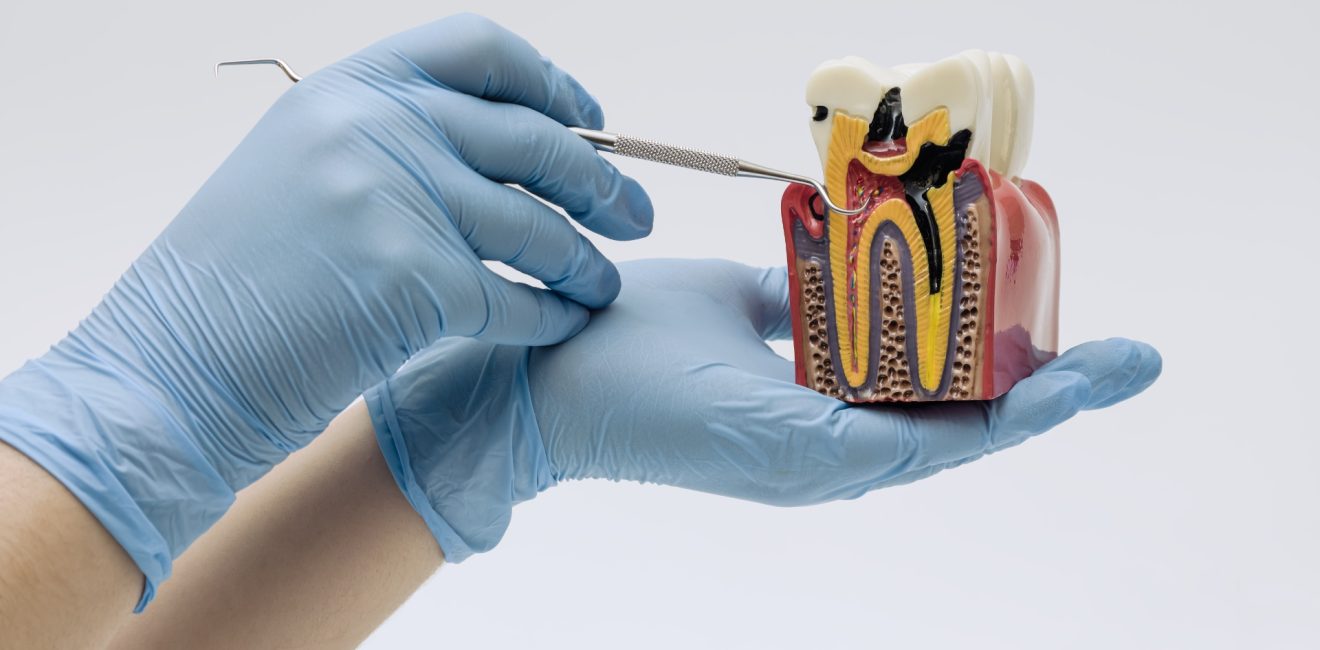
Did you know that tooth decay is one of the most common health problems in the entire world — even more common than the flu? According to the World Health Organization, dental cavities affect people of all ages across every country. In fact, data from the U.S. National Institutes of Health shows that nearly 90% of adults have had some form of tooth decay in their lifetime. That’s almost everyone!
But here’s the good news: tooth decay doesn’t happen overnight. It develops in stages, and if you catch it early, you can stop it — or even reverse it. At PureSmile, our dental and orthodontic team in Shanghai, China, believes that understanding how decay works is the first step to keeping your smile healthy for life.
What Is Tooth Decay?
Tooth decay — also called dental caries or cavities — is the gradual breakdown of your teeth caused by acid-producing bacteria in your mouth. Think of it like rust slowly eating through metal. Over time, the acid wears away your tooth’s protective layers, creating holes or “cavities.”
It’s one of the most widespread health conditions on the planet, affecting children, teenagers, and adults alike. The tricky part? In the early stages, tooth decay often causes zero pain, so many people don’t even realize it’s happening. That’s exactly why understanding the process — and visiting your dentist regularly — is so important.
The Role of Plaque in Tooth Decay
Here’s where it all begins: plaque.
Plaque is a sticky, colorless film of bacteria that constantly forms on the surface of your teeth. Every single time you eat or drink something containing sugar or starch — like soda, candy, bread, or fruit juice — the bacteria in plaque go to work. They feed on those sugars and produce acid as a byproduct.
This acid is the real troublemaker. It attacks your tooth enamel (the hard outer layer of your teeth) and slowly wears it down. If plaque isn’t removed by brushing and flossing, it hardens into a crusty substance called tartar, which is even harder to remove and traps even more bacteria against your teeth.
The more sugar you eat, the more acid is produced. The more acid, the more damage. It’s a cycle — and it starts with plaque.
The 5 Stages of Tooth Decay
Tooth decay is a slow-moving process with five distinct stages. The earlier you catch it, the easier (and cheaper!) it is to treat.
Stage 1 – Demineralization (White Spots)
This is the very beginning of tooth decay, and the best time to catch it. Your tooth enamel is made up of minerals like calcium and phosphate. When acid from plaque attacks the enamel, it strips those minerals away in a process called demineralization.
At this stage, you might notice tiny white or chalky spots on the surface of your teeth. These are early warning signs that enamel is losing strength. Here’s the great news: at Stage 1, decay can actually be reversed. With better brushing habits, fluoride toothpaste, and a dentist’s help, your enamel can reabsorb lost minerals and heal itself.
Stage 2 – Enamel Decay
If the white spots are ignored and the acid keeps attacking, the enamel begins to physically break down. Those chalky white spots may start to turn brown, and small holes — known as cavities — begin to form.
At this point, the damage can no longer be reversed on its own. You’ll need a dentist to remove the decayed area and place a filling to protect the tooth. The good news is that a simple filling is a quick, straightforward fix — far easier than what’s needed in later stages.
Stage 3 – Dentin Decay
Beneath the hard enamel lies a softer layer called dentin. Once decay breaks through the enamel and reaches the dentin, things start moving faster — because dentin is much softer and less resistant to acid than enamel.
Dentin also contains tiny tubes that connect directly to the nerve of your tooth. This is why, at this stage, you may start to feel increased sensitivity to hot, cold, or sweet foods and drinks. That “ouch!” feeling when you sip an iced coffee? That could be dentin decay at work.
A dentist can treat this stage with a filling or, for more widespread damage, a dental crown. But the window for simple treatment is shrinking — act fast!
Stage 4 – Pulp Damage
Deep inside each tooth is the pulp — the soft core that contains blood vessels, nerves, and living tissue. It’s what keeps your tooth alive. When decay reaches the pulp, bacteria infect it, causing inflammation and sometimes intense, throbbing pain.
The pulp is surrounded by the hard walls of the tooth, so when it swells from infection, it has nowhere to go — pressing against the nerves and causing a toothache that can range from uncomfortable to unbearable.
At this stage, a root canal is usually required. Despite its reputation, a root canal is a routine procedure that removes the infected pulp, cleans the inside of the tooth, and seals it to prevent further infection.
Stage 5 – Abscess Formation
This is the most serious — and most painful — stage of tooth decay. If the infected pulp goes untreated, bacteria spread to the root of the tooth and into the surrounding bone and gums. A pocket of pus called an abscess forms, leading to:
- Severe, radiating pain in the jaw or face
- Swelling of the face or neck
- Fever
- Swollen lymph nodes
A dental abscess is a medical emergency. It requires urgent treatment, which may include draining the abscess, a root canal, antibiotics, or in severe cases, tooth extraction. This is why catching decay early — long before Stage 5 — is so critical.
Factors That Speed Up Tooth Decay
Not all teeth decay at the same rate. Several factors can make decay progress faster:
Diet high in sugar and acidic foods. Candy, sodas, sports drinks, and even fruit juice are some of the biggest culprits. Every time you consume these, your teeth are exposed to acid attacks. Sticky candies are especially harmful because they cling to teeth long after you’ve eaten them.
Poor oral hygiene. Skipping brushing or flossing allows plaque to build up undisturbed, giving bacteria more time to produce acid and eat away at enamel.
Dry mouth. Saliva is your mouth’s natural defense system — it washes away food particles, neutralizes acids, and delivers minerals to strengthen enamel. People with dry mouth (caused by certain medications, medical conditions, or simply not drinking enough water) have less saliva and are at higher risk for decay.
How to Stop Tooth Decay Early
The earlier you act, the better your outcome. Here’s what works:
Fluoride treatments. Fluoride is a mineral that helps strengthen weakened enamel and can even reverse early-stage demineralization. Use a fluoride toothpaste every day, and ask your dentist about professional fluoride treatments for extra protection.
Good brushing and flossing habits. Brush at least twice a day for two minutes using a soft-bristled toothbrush, and floss once daily to remove plaque from between teeth where your brush can’t reach. These two habits alone can dramatically reduce your risk of cavities.
Regular dental visits. See your dentist every six months for a checkup and professional cleaning. Dentists can spot decay in Stage 1 or 2 — long before it causes pain — using visual exams and X-rays. Early treatment is always simpler, faster, and more affordable.
Watch your diet. Limit sugary and acidic foods and drinks, especially between meals. Drinking water throughout the day helps rinse away food particles and keeps saliva flowing.
When to See a Dentist
Not all tooth decay hurts right away — that’s what makes it sneaky. But there are warning signs to watch out for:
- White or brown spots on your teeth
- Sensitivity to hot, cold, or sweet foods
- A visible hole or pit in a tooth
- Toothache or pain when biting down
- Bad breath that won’t go away
- Swelling or pus around a tooth
If you notice any of these signs, don’t wait. The longer you delay, the more complex and costly the treatment becomes. A small cavity treated today might take just one appointment to fix. The same cavity ignored for months could turn into a root canal or even a tooth extraction.
Protect Your Smile Today 😊
Tooth decay is incredibly common, but it is also largely preventable. By understanding how it develops — from that first layer of plaque all the way to a painful abscess — you’re already one step ahead.
At PureSmile in Shanghai, China, our team of experienced dental and orthodontic professionals, we guarantee you that we have one of the best dentist in Shanghai, is here to help you catch problems early, protect your enamel, and keep your smile strong at every stage of life. Whether it’s a routine checkup, a filling, or a full orthodontic consultation, we’re committed to giving you personalized, compassionate care.
Don’t wait for pain to tell you something’s wrong. Book a consultation with PureSmile today and take control of your oral health before decay has a chance to advance. Your future self — and your smile — will thank you.


